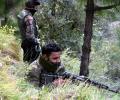
An arrested Pakistani terrorist was killed, while three security personnel were injured on Sunday when militants opened fire on a joint search party of the Army and police inside a forest in Poonch district of Jammu and Kashmir, officials said.
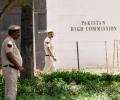
Pakistan is holding a high-level security meeting to formulate a response to India's suspension of the Indus Water Treaty and downgrading of diplomatic ties. The meeting, convened by Prime Minister Shehbaz Sharif, will include the National Security Committee, three services chiefs, and key ministers. The move comes after India blamed Pakistan for a terror attack in Pahalgam, which Pakistan has denied. Diplomatic observers warn that the escalation could further strain relations between the two countries.

Days before the deadly terror attack in Pahalgam, intelligence agencies had flagged the potential targeting of tourists especially those staying in hotels on the outskirts of Srinagar in the foothills of the Zabarwan range, officials in the know said Saturday.

Asserting that India will not tolerate any 'nuclear blackmail', Prime Minister Narendra Modi on Monday said operations against Pakistan have only been kept in abeyance and the future will depend on their behaviour.

Pakistan's record on terrorism is "very clear" and the Pahalgam attack is only the recent example of cross-border terrorism, the ministry of external affairs said on Thursday.
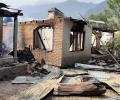
Hundreds of residents along the Line of Control (LoC) and the International Border (IB) in Jammu and Kashmir were evacuated to safer zones after Pakistani shelling following Indian airstrikes on terror targets in Pakistan. The shelling killed 12 people, including four children and two women, and injured over 50. The evacuations come amid heightened tensions between India and Pakistan following the April 22 terror attack in Pahalgam that left 26 civilians dead. The government has provided temporary shelter for those evacuated.

The Pakistani flag has been removed from the historic table at Raj Bhavan in Shimla where the Simla Accord was signed, a day after Pakistan suspended the 1972 agreement. The suspension came in response to India's retaliatory actions following a terrorist attack in Jammu and Kashmir. The Simla Accord, signed by Indira Gandhi and Zulfikar Ali Bhutto, aimed to settle issues bilaterally and maintain peace at the Line of Control. However, Pakistan's frequent violations of the agreement have led to its suspension, raising concerns about the future of India-Pakistan relations.
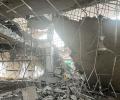
'India won't take anything from Pakistan lying down.'

The Border Security Force (BSF) has scaled down the retreat ceremony held at Attari, Hussainiwala and Sadki along the India-Pakistan border in Punjab following the Pahalgam terrorist attack. The BSF's Punjab frontier said it was suspending the symbolic handshake of the Indian guard commander with the counterpart and the border gates will remain closed during the ceremony. The move is seen as a response to the recent terrorist attack in Jammu and Kashmir, in which 26 people were killed.

Iranian Foreign Minister Abbas Araghchi visited Pakistan and called on both India and Pakistan to "exercise restraint" amid rising tensions between the two countries following the Pahalgam terror attack. Araghchi, who is scheduled to travel to India on Thursday, emphasized the importance of easing tensions and preventing further escalation. During his talks with Pakistani officials, Araghchi and Pakistani Foreign Minister Bilawal Bhutto Zardari reaffirmed their commitment to strong Pakistan-Iran ties and agreed to boost cooperation in trade, energy, and connectivity. Both sides also exchanged views on the situation in South Asia and the US-Iran talks, while agreeing that complex regional issues could be resolved through diplomacy and negotiations.
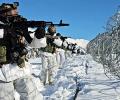
Pakistani troops violated the ceasefire along the Line of Control (LoC) in Poonch district of Jammu and Kashmir, prompting a strong response from the Indian Army. The incident, which occurred in the Krishna Ghati sector, comes a day after two Indian Army personnel were killed in an IED blast near the LoC. The ceasefire violation is the fourth cross-border incident in five days and the first this year.
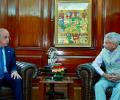
As tensions escalated between India and Pakistan following the deadly Pahalgam terror attack, Iran reached out to both countries, urging de-escalation. Saudi Arabia also expressed concern, with its foreign minister engaging in phone conversations with his Indian and Pakistani counterparts. Iran's foreign minister, Seyed Abbas Araghchi, emphasized the importance of bilateral relations, stating Tehran's willingness to "forge greater understanding" at this critical time. Saudi Arabia's foreign minister, Faisal bin Farhan Al Saud, spoke with both India's External Affairs Minister S Jaishankar and Pakistan's Foreign Minister Mohammad Ishaq Dar. Amidst heightened tensions, India has taken a series of punitive measures against Pakistan, including suspending the Indus Waters Treaty and downgrading diplomatic ties. Pakistan responded by shutting its airspace to Indian airliners and suspending all trade. Both countries exchanged warnings, with Pakistan emphasizing its commitment to "respond firmly to any aggression."

Congress leader Rahul Gandhi visited Poonch in Jammu and Kashmir, offering condolences to families affected by cross-border shelling and encouraging students who lost two classmates to the violence. During an hour-long visit, Gandhi met with students at the convent school that lost the twins, and visited families whose homes were damaged in the shelling.
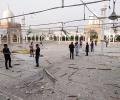
'The Pakistani State has to realise that the pigeons have come home to roost.'

A second terrorist was killed in an encounter with security forces on Wednesday, raising the death toll during the ongoing three-day search operation in a remote village in Jammu and Kashmir's Rajouri district to three, officials said.

The foremost lesson for India today is to beef up its air defence to cater for multiple drone attacks. As seen in Operation Sindoor, we have come a long way, but there's room for getting better. We must develop a robust and almost impregnable air cover over ourselves, asserts IAF veteran Air Commodore Nitin Sathe (retd).

Following the Pahalgam terror attack, the Indian Army launched Operation Sindoor, targeting Pakistani terror infrastructure and posts in the Poonch sector of Jammu and Kashmir. Over 600 artillery shells were fired in three days, decimating 20 Pakistani posts used for infiltrating terrorists into India. The precision strikes crippled enemy logistics, material, and morale, prompting retaliatory attacks by Pakistan on civilian areas. Despite the retaliation, Indian Army officers described the operation as a success, highlighting the high morale of the troops and the effective coordination between artillery and air defense units. The article details the intensity of the artillery shelling and the impact on both sides, highlighting the strategic significance of the Poonch sector and the ongoing tension between India and Pakistan.

Former Pakistani Foreign Minister Bilawal Bhutto has acknowledged the country's tango with terror operatives, saying that Pakistan has a past.
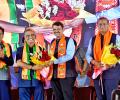
'Why is the Congress not tendering an unconditional apology to the citizens of India?'

The gunfights, which broke out on Saturday night, took place in Pulwama and Budgam districts of the Kashmir valley.
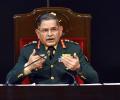
The General said it was "too early" to take a call on the role of Bangladesh, where a change in government may bring about a change in the relationship between it and India.
Pakistan's Deputy Prime Minister and Foreign Minister Ishaq Dar has warned India of a strong response, saying Pakistan will respond to a "brick with a stone" if India takes any action against Pakistan, amid heightened tensions following the April 22 terror attack in Jammu and Kashmir's Pahalgam. Dar alleged that India might have staged the Pahalgam attack to abolish the Indus Waters Treaty (IWT) and warned that any attempt by India to interfere with the treaty would be considered an act of war. He also said that Pakistan had no involvement in the Pahalgam incident and is getting support from countries like Saudi Arabia, China, the United Arab Emirates, the United Kingdom, Kuwait, Bahrain, and Hungary.
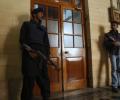
An armed guard of Qatal was also killed in the attack that took place on Saturday night.
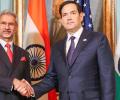
The phone conversation came amid escalating tensions between India and Pakistan over the April 22 terror attack that killed 26 civilians.
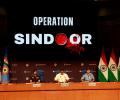
The logo for India's Operation Sindoor, which has captured the imagination of millions, was designed by two Armymen. The operation, a decisive military action against terror camps in Pakistan and Pakistan-Occupied-Kashmir, was launched in response to the Pahalgam massacre. The logo, featuring a bowl of vermilion, has become a powerful symbol of India's resolve against terrorism.

The Pakistani terrorists made the abortive attempt to sneak into the Kalal area of Nowshera from Pakistan-occupied Kashmir (PoK) on May 28 but were killed in the subsequent counter-infiltration operation, the officials said.
India briefed envoys of around 45 nations on the Pahalgam terror attack and its link to cross-border terrorism. The envoys were briefed in two batches by senior officials of the Ministry of External Affairs (MEA). India also announced punitive measures against Pakistan, including expulsion of Pakistani military attaches, suspension of the Indus Water Treaty of 1960 and immediate shutting down of the Attari land-transit post. Pakistan responded by shutting its airspace to all Indian airlines and suspending trade with New Delhi.
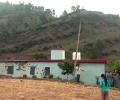
Heavy Pakistani shelling in the border district of Poonch in Jammu and Kashmir left nine people dead and 28 injured. The shelling, described by residents and officials as "barbaric and cowardly", started around 2 am, damaging dozens of residential houses, shops, vehicles, and heritage sites. The incident comes after India launched "Operation Sindoor" in retaliation to the April 22 Pahalgam terror attack. India condemned the act, calling it a cowardly attack on civilians, and reaffirmed that civilian safety remains its top priority.
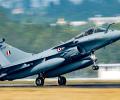
'We will see whether there were losses or not, and whether the war aims were achieved. When the truth comes out, some may well be surprised,' says Dassault CEO.
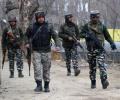
Qari Yasir was involved in last year's Pulwama attack in which 40 CRPF personnel died, police and army officers said.
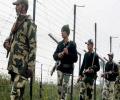
The Border Security Force (BSF) has lodged a protest with Pakistan Rangers after a BSF jawan was apprehended by the Rangers last week after he mistakenly crossed the international border in Punjab. The incident comes amid heightened tensions between India and Pakistan following the Pahalgam terror attack.
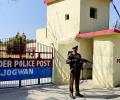
The armies of India and Pakistan on Thursday held a brigade commander-level flag meeting along the Line of Control (LoC) in Jammu and Kashmir's Poonch district to discuss issues related to border management.
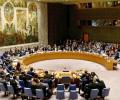
Pakistan was waiting for an opportunity to bring the Jammu and Kashmir issue to the global agenda and resorted to the terrorism route to provoke India, observes Ambassador T P Sreenivasan.
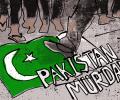
'I'm not dismissing the anger that drives people to stomp on the enemy's flag. 'In times of collective grief and rage, that kind of expression is understandable, especially in the age of viral content. 'But must I do it too?' asks Nikhil Narayanan.
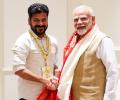
Reddy alleged that contracts worth thousands of crores were awarded to people close to Modi, who then purchased Rafale aircraft.
Troops intercepted the group when it entered 400 metres into this side from across the LoC in Keri sector of Rajouri around 0555 hours, triggering a gunfight, the officer said.

In the letter issued, considering the last night attacks by Pakistani forces in Jammu and Jaisalmer regions, the provision also authorises the use of local authority funds for such emergency measures, giving them precedence over other financial obligations.
The United Nations Security Council held closed-door consultations on rising tensions between India and Pakistan, with envoys calling for restraint and dialogue. The consultations, requested by Pakistan, lasted for about an hour and a half. UN Secretary-General Antonio Guterres expressed concern over the tensions, urging both countries to avoid a military confrontation. India's former Permanent Representative to the UN, Syed Akbaruddin, said that no consequential outcome could be expected from the discussion.
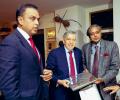
All-party parliamentary delegations on Friday met leaders and diplomats from several countries to galvanise international action against terrorists and decisively counter the tactics of those who perpetrate, support and sponsor cross-border terror activities against India.
A day after his arrest, top Lashkar-e-Tayiba commander Nadeem Abrar and a Pakistani terrorist were killed in an encounter in Parimpora area of the city, police said on Tuesday.
